

The Value Investing Philosophy of the FORUM Group
FORUM follows the principles of value investing, which was founded by Benjamin Graham in the 1930s: The core is to estimate the "intrinsic value" of a company as objectively as possible - regardless of the stock market price. The concept of the margin of safety requires that an investment in a company should only be made if the share price is below this intrinsic value. The original concept of Benjamin Graham has been further developed by other value investors, the most famous of whom is Warren Buffett. FORUM pursues its own approach, which is based on the investment philosophy of Berkshire Hathaway.
Value Investing according to Warren Buffett
As one of the most successful value investors worldwide, Warren Buffett is the defining face of this investment strategy. With his company Berkshire Hathaway, he has shown how consistently high returns can be achieved through value investing. His approach can be summarized as follows:
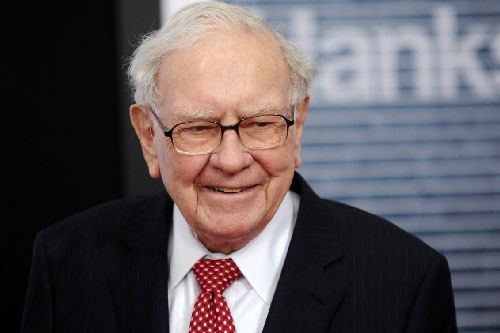

- Long-term company participation: Buffett does not simply buy shares, but acquires stakes in companies that he intends to hold for the long term.
- Clear selection criteria: The focus is on quality companies with strong competitive advantages, reliable management and solid figures.
- Confidence in long-term trends: Short-term price fluctuations are secondary for him - sustainable growth is decisive.
These principles have made the strategy known worldwide. If you would like to learn more about the background, methods and application examples, you can find out more in the publications of the Forum Group.
The Strategy of the FORUM Group
The FORUM Group has been successfully focusing on value investing for years. The team concentrates on carefully selected companies with clear competitive advantages, a robust balance sheet and convincing management. Instead of reacting to short-term trends, the strategy always remains long-term and responsible.


- Own Investments: The FORUM Group invests itself in markets and companies where the risk-reward ratio is convincing in the long term.
- Consistent implementation: The focus is on company visits and a deep insight into business models. A disciplined approach makes it possible to sit out market sentiments and remain calm when others sell in panic.
Our Value Investing Principles
- Intrinsic value as foundation: “Value is what you get, price is what you pay”
- In-depth fundamental analysis: “Know what you own”, “Internal Compounding”
- Concentration of the portfolio: Buffett's “20-Punch-Card” approach
- Patience: Waiting for the right opportunity
- Risk definition: Risk is understood as a permanent loss of capital, not as volatility


Our Investment Strategy
As part of our strategy, we pursue a focus on quality: our aim is to identify outstanding companies and retain them in the long term. This involves a combination of:
- High customer loyalty and recurring income
- Excellent scaling effects and a capital-efficient business model
- Leading or even world-class management
- Patience: Waiting for the right opportunity
The results speak for themselves
The average returns of the FORUM Group have been above the market level in recent years. You can find exact figures and current development graphs on the Results page. There you can get a comprehensive picture of the returns.


Publications and in-depth insights
Those wishing to delve deeper into the FORUM Group's strategy can find further specialist articles, interviews and market analyses under Publications. There, a detailed insight into the valuation methods is given, supplemented by current market observations and experience reports.
"It's far better to buy a wonderful company at a fair price, than a fair company at a wonderful price."
FAQs Value Investing
Value investing is the endeavor to acquire companies whose intrinsic value is above the current market price. Anyone who recognizes this discrepancy has the opportunity to bet on a potential undervaluation and profit from the long-term increase in price.
- Analysis of the fundamentals: Key figures such as the price-earnings ratio (P/E ratio), price-to-book ratio (P/B ratio) or free cash flow are the focus.
- Safety margin: A purchase below the estimated intrinsic value creates a buffer against price declines and ensures higher return opportunities.
- Long-term investment horizon: Unlike short-term speculation, value investors often remain invested for several years and rely on the true value of a company prevailing over time.
There is no direct and common German translation for "Value Investing", as the term is mostly used in its English form in the financial world. However, there are some paraphrases that aptly describe the concept:
- "Substanzwert-Investieren" – emphasizes that it is about the intrinsic value of a company.
- "Wertorientiertes Investieren" – emphasizes that investors are looking for undervalued stocks.
- "Investieren in unterbewertete Unternehmen" – a descriptive but less catchy variant.
- "Langfristiges wertbasiertes Investieren" – could serve as an explanation if the English term is to be avoided.
In practice, however, the term "Value Investing" is usually used in German as well.
The “20-Punch-Card” approach by Warren Buffett is a metaphor for a disciplined, long-term investment strategy. It means that an investor should imagine that he is only allowed to make 20 investment decisions in his entire life – similar to a punch card with only 20 punching options.
Key statements of this approach:
- Quality over quantity: Investors should focus only on their best ideas instead of making many average investments.
- Long-term thinking: You should choose companies that can be permanently successful instead of speculating on short-term profits.
- Thorough analysis: Since you only make very few investments, every decision should be well-founded and well-thought-out.
- Patience and selective action: Many investors act too often and hastily. The 20-Punch-Card approach forces one to invest only in the very best opportunities.
- Making consequences more conscious: If each investment consumes one of the few “punches” on the card, you think twice about whether it is really worthwhile.
Buffett is saying that if investors focused on a few, excellent companies and held them for the long term, their return would be much higher than if they were constantly buying and selling. Practical relevance: He himself has bought companies like Coca-Cola, Apple or American Express with this principle and held them for decades - with enormous success.
The value strategy is based on the identification and acquisition of undervalued companies with solid fundamentals. Investors analyze factors such as the price-earnings ratio (P/E ratio), the price-to-book ratio (P/B ratio), the dividend yield and the financial stability of the company. The aim is to acquire shares in companies whose market price is below their intrinsic value in order to profit from a future increase in value.
A prominent example of the successful application of the value strategy is Warren Buffett, who has achieved high long-term returns with his company Berkshire Hathaway. Buffett emphasizes the importance of the margin of safety and prefers to invest in quality companies with strong competitive advantages, reliable management and solid finances.